Learn how to make Thai Red Curry with coconut milk, red curry paste, tender chicken, and vegetables. Easy step-by-step recipe and expert tips.
How to Make Thai Red Curry: The Complete Guide to Rich, Creamy, Restaurant-Quality Thai Curry at Home
Introduction
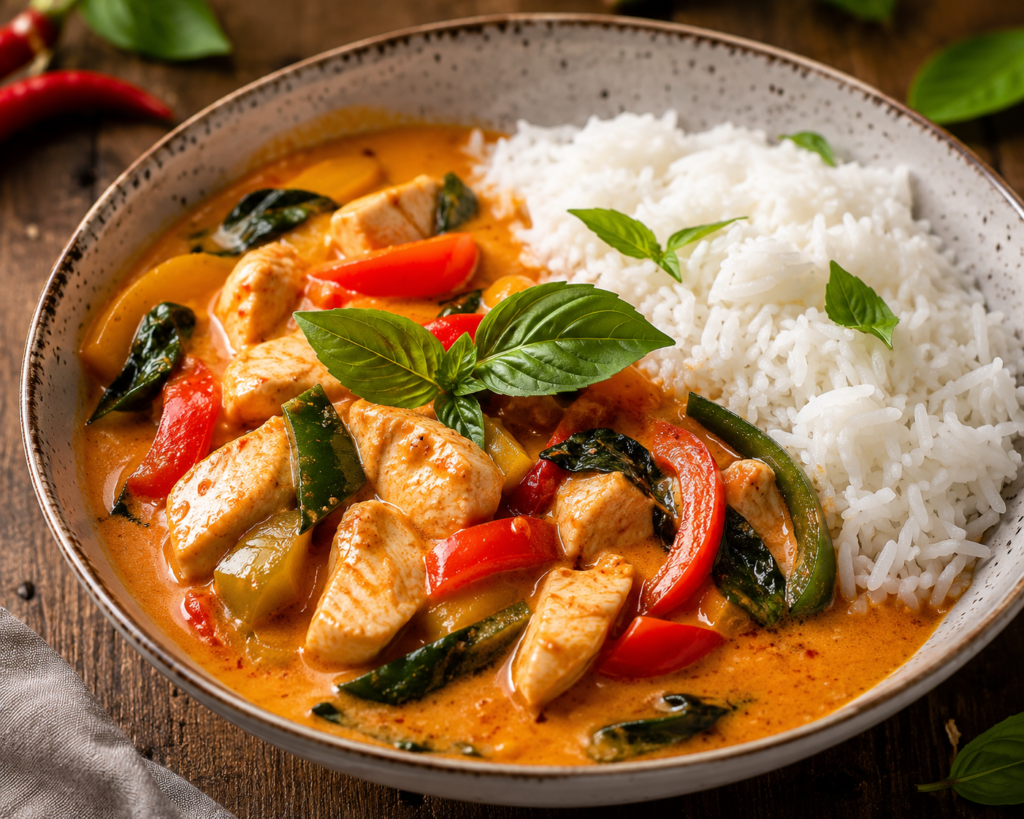
Thai Red Curry is one of Thailand’s most famous and flavorful dishes. Known for its rich coconut milk base, aromatic red curry paste, tender protein, and colorful vegetables, this comforting curry delivers the perfect balance of spicy, sweet, savory, and creamy flavors in every bite.
If you’ve ever wondered how to make Thai Red Curry that tastes just as good as the version served at your favorite Thai restaurant, you’re not alone. Many home cooks struggle with watery curry, overpowering spice levels, bland sauces, or vegetables that become mushy during cooking. Fortunately, these common issues are easy to avoid with a few simple techniques and quality ingredients.
In this complete guide, you’ll learn everything you need to know about creating the perfect Thai Red Curry recipe. From selecting authentic ingredients to mastering curry paste and coconut milk, we’ll cover every step. You’ll also discover expert cooking tips, delicious variations, storage recommendations, and answers to frequently asked questions.
Whether you’re preparing a quick weeknight meal or an impressive dinner for guests, this homemade Thai Red Curry delivers restaurant-quality results every time.
The Secret to Perfect Thai Red Curry
Restaurant-quality Thai curry comes down to a few important techniques.
Use Quality Red Curry Paste
The curry paste is the heart of the dish.
Authentic Thai red curry paste contains chilies, lemongrass, garlic, galangal, shallots, and aromatic spices.
Using a high-quality paste creates deeper, more authentic flavor.
Cook the Curry Paste First
One of the biggest mistakes is adding curry paste directly to liquid.
Cooking the paste in oil or coconut cream first releases its aromas and intensifies flavor.
This technique is commonly used in Thai restaurants.
Balance Sweet, Salty, and Spicy Flavors
Authentic Thai cuisine focuses on balance.
Coconut milk provides sweetness, fish sauce adds saltiness, and curry paste contributes heat.
Adjust these elements gradually until the flavors harmonize.
Ingredients List
Serves 4
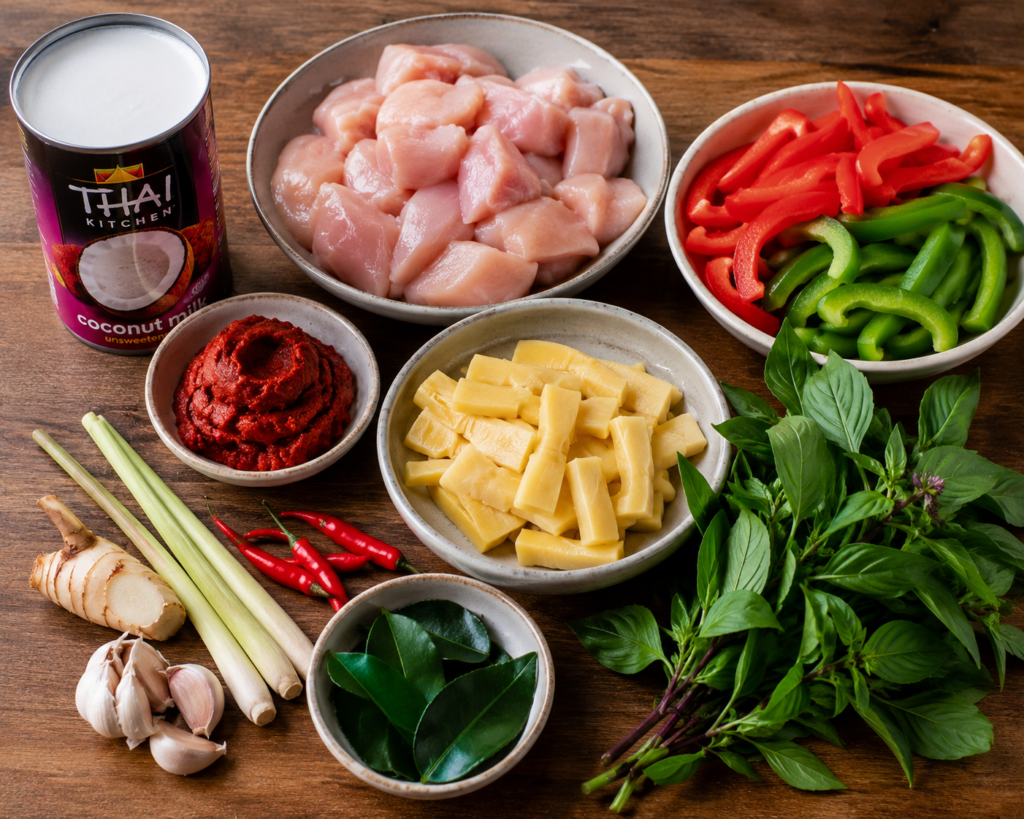
For the Curry
- 1 pound boneless chicken breast or thighs, sliced
- 2 tablespoons red curry paste
- 2 tablespoons vegetable oil
- 1 can (13.5 ounces) full-fat coconut milk
- 1 cup chicken broth
- 1 red bell pepper, sliced
- 1 yellow bell pepper, sliced
- 1 cup bamboo shoots, drained
- 1 tablespoon fish sauce
- 1 tablespoon brown sugar
- Juice of 1 lime
For Garnish
- Fresh Thai basil leaves
- Sliced red chilies
- Lime wedges
For Serving
- Steamed jasmine rice
Optional Add-Ins
- Shrimp
- Tofu
- Green beans
- Zucchini
- Mushrooms
- Baby corn
Ingredient Substitutions
- Coconut aminos can replace fish sauce.
- Tofu can replace chicken.
- Vegetable broth can replace chicken broth.
- Brown rice can replace jasmine rice.
Step-by-Step Instructions
1. Prepare the Ingredients (10 Minutes)
Slice the chicken and vegetables into thin, uniform pieces.
Measure all ingredients before cooking.
Thai curries cook quickly, so preparation is important.
2. Heat the Oil (1 Minute)
Heat vegetable oil in a large skillet or wok over medium heat.
Allow the oil to become hot before adding the curry paste.
3. Cook the Curry Paste (2 Minutes)
Add the red curry paste.
Cook while stirring continuously until fragrant.
This step develops deeper flavor and aroma.
4. Add Coconut Milk (2 Minutes)
Pour in about half of the coconut milk.
Stir until the curry paste fully dissolves into the liquid.
Allow it to simmer gently.
5. Cook the Chicken (5 Minutes)
Add the sliced chicken.
Cook until nearly done and coated with the curry mixture.
6. Add Remaining Liquids (2 Minutes)
Pour in the remaining coconut milk and chicken broth.
Stir thoroughly.
7. Add the Vegetables (5 Minutes)
Add bell peppers and bamboo shoots.
Cook until tender-crisp.
Avoid overcooking the vegetables.
8. Season the Curry (2 Minutes)
Add fish sauce, brown sugar, and lime juice.
Taste and adjust seasoning if necessary.
9. Finish with Basil (1 Minute)
Stir in fresh Thai basil leaves.
Allow them to wilt slightly.
10. Serve Immediately
Ladle the curry into bowls.
Serve hot with steamed jasmine rice.
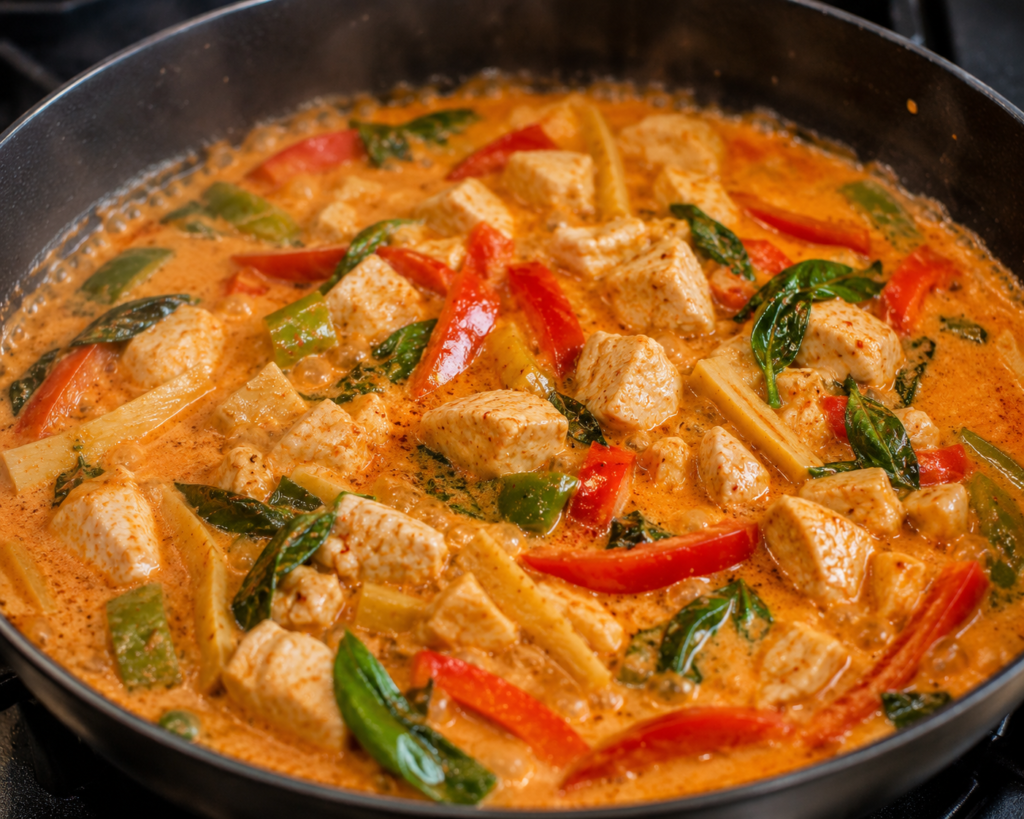
Tips for Restaurant-Style Thai Red Curry
Use Full-Fat Coconut Milk
Full-fat coconut milk creates a richer and creamier curry.
Light coconut milk can produce a thinner sauce.
Don’t Boil Aggressively
A gentle simmer preserves the smooth texture of coconut milk.
High heat can sometimes cause separation.
Add Vegetables Near the End
Vegetables should remain slightly crisp.
Overcooked vegetables lose both texture and color.
Taste Before Serving
Authentic Thai curries rely on balance.
Adjust sweetness, saltiness, and acidity before serving.
Garnish Generously
Fresh basil, lime wedges, and sliced chilies add brightness and visual appeal.
Variations & Customizations
Chicken Thai Red Curry
The classic version featuring tender chicken and vegetables in creamy coconut curry sauce.
Shrimp Red Curry
Replace chicken with shrimp for a lighter seafood variation that cooks even faster.
Vegetarian Red Curry
Use tofu and a variety of vegetables such as broccoli, mushrooms, and zucchini.
Beef Red Curry
Thinly sliced beef creates a rich and hearty alternative.
Extra-Spicy Red Curry
Add fresh Thai chilies or additional curry paste for increased heat.
Internal Linking Opportunities:
- Thai Green Curry Recipe
- Chicken Satay
- Coconut Rice Recipe
- Vegetable Stir Fry
- Thai Basil Chicken
Storage & Reheating
Store leftover Thai Red Curry in an airtight container in the refrigerator for up to 4 days.
For best results, reheat gently in a saucepan over medium-low heat.
Add a small splash of water or coconut milk if the sauce becomes too thick.
Thai Red Curry also freezes well for up to 2 months. Thaw overnight in the refrigerator before reheating.
Frequently Asked Questions
What is the difference between red curry and green curry?
Red curry is generally richer and slightly milder, while green curry tends to be fresher, herbier, and often spicier.
Can I make Thai Red Curry vegetarian?
Yes. Replace chicken with tofu and use soy sauce or coconut aminos instead of fish sauce.
Is Thai Red Curry spicy?
It has moderate heat, but you can easily adjust the spice level by using more or less curry paste.
What vegetables go best in Thai Red Curry?
Bell peppers, bamboo shoots, green beans, zucchini, mushrooms, and carrots all work well.
Can I freeze Thai Red Curry?
Absolutely. It freezes well and maintains excellent flavor when properly stored.
Conclusion
Now that you know how to make Thai Red Curry, you can recreate one of Thailand’s most beloved dishes in your own kitchen. By using quality curry paste, creamy coconut milk, and fresh ingredients, you’ll achieve bold, authentic flavors with every batch.
Whether you’re making a quick family dinner or impressing guests with homemade Thai cuisine, this best Thai Red Curry recipe lovers, and enjoy a warm bowl of Thai comfort food whenever the craving strikes.
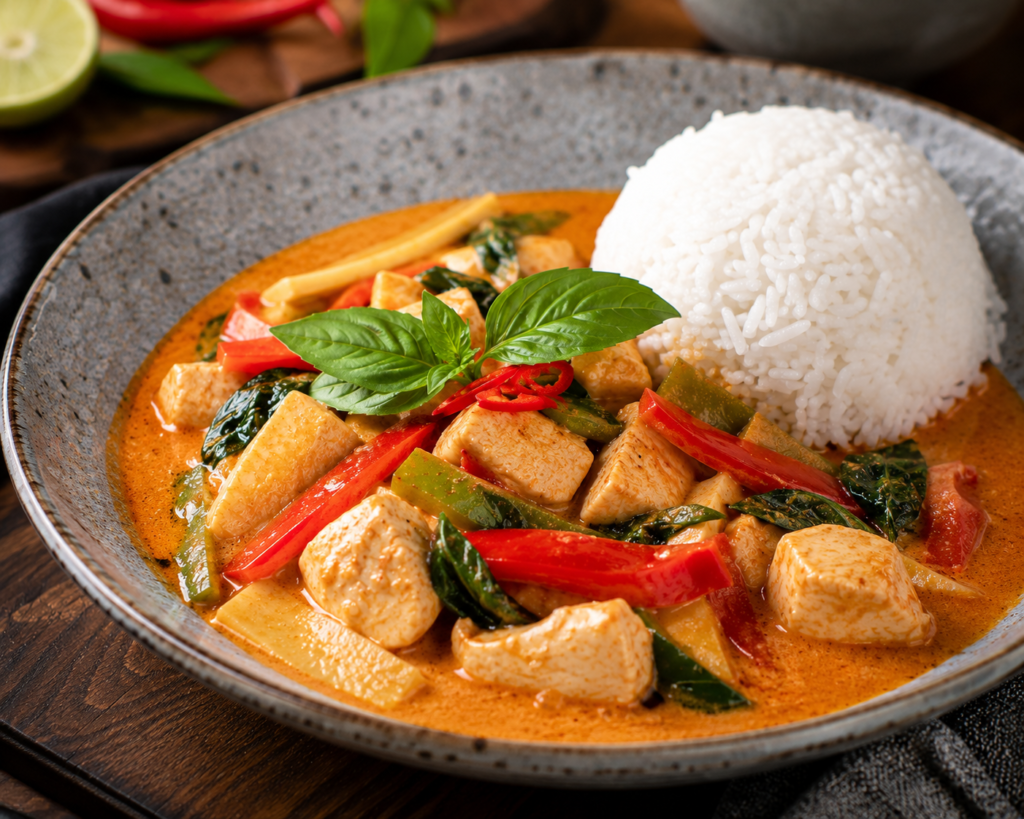
Recipe Card Summary
Recipe Name: Easy Homemade Thai Red Curry
Prep Time: 10 minutes
Cook Time: 20 minutes
Total Time: 30 minutes
Servings: 4
Calories: Approximately 480 calories per serving